Showing posts with label forced retirement. Show all posts

Tuesday, 29 September 2009

Age Concern reveals background behind high court decision on DRA

Age Concern plans to take the battle to Parliament as High Court upholds Default Retirement Age.

Ruling on the future of forced retirement ages‚ a high court judge actually revealed that the Government had only avoided defeat because ministers had already caved in to pressure for a review in 2010. Mr Justice Blake said: ‘I cannot presently see how 65 could remain as a DRA after the review’.

The fate of millions of people who want or need to work beyond the age of 65 now lies directly in the hands of MPs and peers‚ says Age Concern and Help the Aged.

Andrew Lockley‚ Head of Irwin Mitchell’s Public Law team‚ which represented Age Concern and Help the Aged‚ said:

“The judge’s criticism of the Government’s approach to the default retirement age will be seen as justifying the strenuous efforts made by Age Concern and Help the Aged in this litigation. Had the Government not pre-empted this and announced a review while this case was ongoing‚ then the ruling would have gone against it.

“The judge has effectively given the Government breathing space to go away and change the rules. But his comments that he cannot see how the DRA can stay at 65 will give renewed hope to thousands of workers approaching that age. Essentially‚ the Government has been told to think again.”

Friday, 25 September 2009

UK retirement age challenge fails

Unbelievable but sadly only too believable. The High Court has ruled that it is legal for UK employers to force workers to retire at the age of 65.

In the UK, a worker can see their employment end at the age of 65 without any redundancy payment - even if they do not want to retire.

The case had been brought by Age Concern and Help the Aged which argued that the compulsory retirement age goes against EU regulations.

But their challenge, heard in July, has now been thrown out by the court. As usual we have judges making crucial social decisions with no account given to social implications. Maybe we should throw them out at 65 instead of being able to continue until at least 70 and then most of them can continue to do a range of legal work up until 75. More and more institutions are lining up to ditch this policy. Even this G'ment has brought forward a review of this to 2010 - when of course they may not be in power. In the meantime thousands of people will have their livelihood stopped at exactly the same time as the G'ment are trying to encourage older people to say in employment longer. Does joined up thinking mean anything to these people! Of course MP's also are not thrown out at 65.....

Thursday, 3 September 2009

CMI demands an end to default retirement age.


We welcome to the growing club of organisations and political parties demanding an end to the default retirement age (DRA) of 65 the CMI Chartered Management Institute.

"We would like to see the abolition of the DRA, to enable businesses to retain their talent. Managers know that the UK has an ageing population, which means increasing numbers are able to work productively into their later years.

Clearly, the recession has had a significant impact on the labour market, but there are still skills shortages in some key areas, including management. Older employees may have these valuable skills and experience, so keeping them in work longer is a powerful driver for managers to support performance.

Joint research by the CMI and Chartered Institute of Personnel Development (CIPD) in 2005, confirms that employer’s interest in keeping older employees is driven by a concern to retain valuable skills and talent:

* 93pc of those surveyed agree updating skills is worthwhile

* there is no cost advantage from shedding older, more experienced workers

* flexible working is a much better answer but is not as prevalent as the CMI would like

One way of potentially cutting the necessary costs, but retaining skills within the organisation could be in the form of flexible working.

These arrangements are key to keeping skills and implementing better solutions around retirement. CMI research shows that 68pc of managers anticipate working part-time towards the end of their career. Also 24pc said that this would be the most important factor in their decision-making on when to retire.

Unfortunately, these arrangements appear to be available only to a minority, with only 34pc offering part-time working to older employees. So, organisations are missing out on their chance to retain their talent and cut costs at the same time.

Ultimately, older employees with the right skills and experience, possibly gained from the last recession in 1991 are of great benefit to UK business. They play a valuable role in coaching and mentoring younger employees. Older employees are keen to give something back, which employers are looking to develop the talent of Generation Y, the younger people who are arguably the future of our companies. So, it is clear that the benefits of having older employees with a wealth of skills and experience far outweigh any negatives, which adds further weight to the argument for the eradication of the DRA."

It really is getting more and more frustrating that this G'ment, although drawing forward the decision about this to 2010, is still prevaricating on this issue. I think the CBI has friends in high places as they are one of the few bodies still advocating it.


Thursday, 30 July 2009

Mandatory retirement age good for employers? We don't think so.


The Employers Forum on Age (EFA) and The Age and Employment Network (TAEN) have conducted a survey of 198 HR directors and senior managers, designed to gauge the experience of employers implementing a mandatory retirement age (MRA). 85% confirmed their organisation had an MRA, of which 98% have set it at age 65.

However, the findings of the survey showed that while 81% of firms with an MRA believed it made manpower and succession planning easier, 71% of those without a default retirement age said they experienced no such problems.

In addition, while 80% of employers using an MRA felt it stopped the careers of younger workers from being blocked, two-thirds said they did not believe it helped to improve performance and 53% claimed an MRA had not helped to move on underperforming older employees.

Other findings revealed that 95% of employers with an MRA apply it to all staff, while 10% said they always agree to requests from individual employees to continue working past the MRA, although the majority - 84% - only sometimes agree and 7% never do.

The survey showed 64% of those questioned claimed the biggest disadvantage to a default retirement age is the loss of talent to an organisation, while 74% admitted it had an adverse impact on workers preferring to work past age 65, and 37% suggested it posed risks from demographic factors such as population ageing and declining birth rates.

Meanwhile, of the 29 firms without an MRA, 93% revealed this was a formal policy decision in the organisation, and 78% claimed the move was a positive step as it improved morale and at least 45% said they believed it had improved performance in some way.

That said, the findings also showed that in those firms without an MRA just 18% said "most" employees work beyond age 65, while 82% admitted "only a few" take advantage of the potential to keep working.

In conclusion, the EFA and TAEN claimed: "Taking these results at face value, it would seem that the advantages of having an MRA have been exaggerated. The benefits of mandatory retirement for employers do not seem in practice to match the claims made by those who wished to see mandatory retirement retained."

It argued the survey "undermines the argument that there are strong business benefits in having MRAs" as most respondents agreed its presence "had an adverse impact on employees who want to work on".


Tuesday, 14 July 2009

Default retirement age - has the penny finally dropped?


Well to 2010 at least. The new equality bill is creating problems as clearly kicking someone out of their job at 65 is to put it mildly discrimination based on age. Explaining the change in the timing of the review, Prime Minister Gordon Brown said: "Evidence suggests that allowing older people to continue working, unfettered by negative views about ageing, could be a big factor in the success of Britain's businesses and our future economic growth." Has the penny finally dropped? Well the TUC think so. The IOD think so. The Tories and Lib Dems think so. We are just left with the Taliban in the CBI still disapproving. They say its research had suggested that 81% of those who asked their employer to keep working had been allowed to do so. In which case why make such a fuss. Listening to their comments about the workplace, the workforce and management practices remind me of a living model of employment in the 1950's. Many legal cases are queuing up to be heard on this so abandoning this will also keep a great deal of money outside of lawyers pockets - which must be a good thing also!

Tuesday, 30 June 2009

All party committee backs end of default retie

At last we have an all party committee of MP's demanding the ending of the default state retirement age at 65. We still of course have the 20th century thinking of the CBI to deal with. The IOD will shortly be announcing their support for abolition of this discriminatory practice.

Saturday, 13 June 2009

Companies till blinkered about effect of boomer retirement

A new poll by the Boston Consulting Group and the the European Association of People Management has found that nearly half of European companies do not even plan their workforce requirements more than a year in advance.

What this means is that, once we are through this current recession, the twin pressures of falling birth rates and baby boomers heading off into retirement are likely to resurface with a vengeance, it has argued.

Companies that have been forced to cut costs and reduce headcounts during the recession may well struggle to find the people they need when growth eventually returns.

Managers therefore need to be doing more to consider the long-term impact of their recruitment and retention actions, even in times of crisis, it emphasised.

"In 10 years, the scarcest resource for a company will be people," said Rainer Strack, co-author of the report and senior partner in Boston Consulting's Dusseldorf office.

Last month research by recruitment firm Manpower, for example, suggested that nearly a third of managers worldwide were still struggling to fill skilled salespeople and technical positions, despite the fact that more people were now out in the jobs' market.

Boston Consulting also sounded a warning on this issue in April last year, arguing in research with the World Federation of Personnel Management Associations that the combination of ageing workforces in the West and intense demand for skilled workers in developing nations could in time create a global "talent crunch" that could be as damaging to the financial credit crunch.

Wednesday, 27 May 2009

Charity demands 3 things from G'ment

Age Concern and Help the Aged are calling on the G'ment to commit to 3 actions to help deal with the ageing tsunami that we keep writing about.

Scrap the National Default Retirement Age which forces people to retire at 65 and allow people to continue working as long as they want or need to while they are able to do a good job.

• Provide financial incentives to employers who take on 50 plus workers who have been out of work for more than 6 months.

• Provide a tailored package of support for unemployed over 50s‚ including specialised training for JobCentre Plus staff to recognise the specific needs of older people job searching and providing them with meaningful‚ holistic support.

As we keep saying - is anyone listening out there?


Saturday, 23 May 2009

Over-55s lifting share of jobs in Oz

An article in the Australian quotes some new research by Monash University which has found ageing workers are finding more jobs, while young people are being laid off. In fact people aged over 55 are the only ones in the labour market increasing their rates of employment, even after the economic downturn.

This is of particular interest in Australia which has announced an increase in the state pension age to 67 by 2023. The researchers say that their fin
dings run counter to the argument that it was older workers who were facing the chop in the downturn, and destroyed the argument that extending the pension age to 67 would force people on to the dole.

it is difficult to see how our own G'ment can go on ignoring this issue and their plans to increase pensionable age to 68 by 2038 is now looking totally unrealistic with the huge deficit we have. Is anyone out there or even thinking about this? Just a bit too preoccupied in keeping their own seats at the moment....


Friday, 22 May 2009

Economic madness


2 contrasting stories today. The Times has a piece about the pioneering work of George Magnus, who is joining the growing numbers of us in making the point that the demographic time bomb that is with us is as great a natural disaster as climate change in the short term.

"Baby-boomers hitting retirement may not sound exciting next to the threat of countries disappearing into the ocean or drought wiping out food crops, but the threat is real and the results could be expensive. Mr Magnus puts this into context by explaining that the cost of cleaning up the banking crisis will be up to 25 per cent of GDP, but that the cost of the UK’s ageing population – the next four decades of pensions, healthcare, disability benefits and residential care – will cost 330 per cent of GDP." “The richest source of participation in this country is people aged over 55,” Mr Magnus, 60, said. “We have to change the nature of work and the workplace to allow people to work longer.” He states that a retirement age of 65 is a total nonsense. Our economy cannot support an increasing number of people living 20 unproductive years after that.

Yet on the other hand, a recent survey from Age Concern and Help the Aged shows that 1 in 7 HR managers plans to use the default retirement age to help cut jobs. Why is this craziness occuring? Because yet again we have no leadership on this issue from this current G'ment.

Saturday, 16 May 2009

Lateral thinking.........?

In the midst of the political meltdown caused by the fury over MPs' abuse of expenses, some people are still seeing the politicians take, on 'fixing the recession' that happened on-their-watch, as hardly creative or guaranteed to work. Fortunately, there are many more creative minds than ever enter the Houses of Westminster. Here was one suggestion that circululated recently, I suspect only half-jokingly!

'Dear Mr. Darling, Please find below my suggestion for fixing Britain's economy. Instead of giving billions of pounds to banks that will squander the money on lavish parties and unearned bonuses, use the following plan.
You can call it the Patriotic Retirement Plan:
There are about 20 million people over 50 in the work force. - Pay them £1 million apiece severance for early retirement with the following stipulations:
1) They MUST retire. Result - 20 million job openings - Unemployment fixed.
2) They MUST buy a new British CAR. Result - 20 million cars ordered - Auto Industry fixed.
3) They MUST either buy a house or pay off their mortgage - Result - Housing Crisis fixed.
4) They must send their kids to school / college /university - Result - Crime rate fixed
5) Buy £50 of alcohol / tobacco a week there's your money back in duty / tax etc
It can't get any easier than that!
P.S. If more money is needed, have all members of parliament pay back their falsely claimed expenses and second home allowances If you think this would work, please forward to everyone you know. If not, please disregard.'

The writer might well have added, 'it could work wonders in also solving some of the looming pension crises!'
This would be an interesting challenge for us over-50s. If such an off-the-wall solution were ever offered (and our political leaders would never be so creative) how many of us would be prepared to retire?
More importantly, how many of us would be able to design a lengthy retirement in in which we can achieve quality of life, purpose and meaning? How many of us could find opportunities, outside of paid work, in which to use our skills and talents, contributing to causes we believe in? How many of us would take that chance to fulfil those long-held ambitions we have never had time for, or engage with the excitement of lifelong learning, just for the joy of continuing to renew ourselves? How many of us could design a 'portfolio retirement' in which we piece together a jigsaw of involvements which would result in us saying, 'I don't know how I ever found time to work?'
We should of course be already planning how to have such a life. Not because the scheme above will ever happen, but because always having an alternative, even when in work, is our security!
'The Rainbow Years' invites reflection on some of these challenges!

Thursday, 14 May 2009

How to pay for the crisis

This is the title of a paper by Ray Barrell, Ian Hurst and Simon Kirby from the NIESR examining the different ways of closing the gaping hole in the public finances. What I found fascinating was that they concluded that a very effective strategy would be to get people to stay longer in paid work. Each year of additional employment would cut the budget deficit by 1% of GDP after 10 years and in time reduce government debt by 20% of GDP. Boosting average working lives by 3 years would cut the deficit by 3% and the government debt by 60% of GDP. And yet this government is still allowing companies to throw people out at 65.

Thursday, 30 April 2009

More MP's against compulsory retirement


Have a look at Mark Easton's blog today as he reports on a new development at Westminster on this emotive issue.

The Work and Pensions select committee report published today demands that compulsory retirement be scrapped:

"We recommend that the Government removes regulation 30, which permits employers to continue to compulsorily retire employees at the age of 65. This regulation contradicts the Government's wider social policy and labour market objectives to raise the average retirement age and allow people to continue to work and save for their retirement."

Mark reports that there was some disappointment that this week's Equality Bill did not propose an end to mandatory retirement on the grounds that it self-evidently discriminates against workers purely on the grounds of age.

How much longer are we going to have to wait? Especially when you look at the demographics which Mark also reports.

Monday, 20 April 2009

More employment data from Australia..

.... which supports the US data which is reiterating that it is the younger age groups who are bearing the brunt of the depression.

Data released by the Bureau of Statistics show that while people aged under 25 lost 91,500 full-time jobs in the year to February, people over 50 added 104,000 full-time jobs.

More unexpectedly, while the number of under-25s who were unemployed or out of the workforce shot up by 129,000 over the year, the number of over-50s unemployed, retired or taking time out shrank by 3000.

That means more older people went back to work over the year — no doubt largely because plunging sharemarket values and interest rates have slashed their life savings and/or retirement income streams.

By February 2009, 30 per cent of men aged 65 to 69 were working, and 58 per cent of those aged 60 to 64. Employment rates were much lower for women, but even so, 14 per cent of women aged 65 to 69 were in work, and 38 per cent of those in their early 60s.

While unemployment rose by 187,000 over the year, the figures show just over half of that was concentrated among the young.

I am still trying to find the equivalent UK statistics which just seem hard to get hold of.

Thursday, 9 April 2009

If you think the recession is bad news read on...


So once the recession is over we will be OK? Right? Wrong according to the IMF. They are claiming that once the recession passes, countries will need to work on closing their gaping fiscal deficits without triggering further collapses in output. They will also need to service bloated national debts. The International Monetary Fund estimates that among the Group of 20 nations whose leaders meet in London this week, the industrialised members will have increased their national debts by an average equivalent to nearly 25 per cent of gross domestic product between 2007 and 2014.

That is a heavy burden. But, to 2050, the cost of this crisis will be no more than 5 per cent of the financial impact they face from the ageing of their citizenry. As the IMF says, “in spite of the large fiscal costs of the crisis, the major threat to long-term fiscal solvency is still represented, at least in advanced countries, by unfavourable demographic trends”.

In the UK, for example, the government expects the extra annual costs imposed by ageing to reach 1.6 per cent of GDP by 2017-18. That is an increase in spending equivalent to the cost of servicing a rise in the national debt burden of about 37 per cent of GDP, according to FT calculations. That outstrips the 29 percentage point rise that the financial crisis and economic downturn are expected to inflict.
The picture by the way is what in my presentations I like to call the Baby boomer tsunami. It is clear that this is coming yet it is so often ignored.
The best we can do therefore is to keep as many boomers in paid work for as long as possible. Does our Government ever read these reports!

Thursday, 2 April 2009

IOD now supports abolition of the default state retirement age


Its not always attractive to keep looking at older posts and because of this I want to highlight a comment that has been posted today by Malcolm Small from the IOD. We had a conversation today about the IOD position and Malcolm informed me that he is now writing a new policy paper to be launched in the autumn on this and related issues. To save you the trouble I am reproducing his comment below. "Well, you don't need to persuade the IoD, at least, any more. I'm writing a policy paper for launch in the Autumn - the Roadmap for Retirement Reform 2009 - which will look positively at how older workers can add real value in business. The impossibility of funding a 30 year retirement from a 35 year working life means continued employment is a vital, legitimate, strategy for the "baby boom" generation. There's no doubt we will see a lot more elder workers, at all levels, in future - and elder entrepreneurs, too." Thank you to the IOD for having the courage to change their views so publically.

Friday, 27 March 2009

Age discrimination at the top - I don't think so!

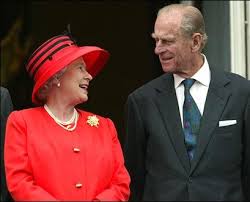
A discussion has begun to rid the UK of old laws and traditions that would prevent a Roman Catholic or a first born girl from inheriting the Crown. I notice that there is no mention of anyone in this position not being allowed to work because they have reached 65! Charles need not concern himself with this - unlike the thousands of other people who are still being discriminated against because of their age. Actually, the royal couple are fantastic examples of just how much valuable work can be carried out be people who are well over 65. Queen Elizabeth's mum was still doing part time work at the age of 100. So let us have overall genuine diversity here for us all.

Tuesday, 24 March 2009

Older workers still face job hunting challenges despite age neutral unemployment figures


Commenting on the latest employment statistics, Chris Ball, Chief Executive of TAEN - The Age and Employment Network, says:

"The continuing rise in unemployment shows how much employers and employees are suffering. The ‘good news,’ if one can use that expression in such dismal circumstances, is that the trajectory of job losses in the 50 plus age bracket is not carrying the same dramatically skewed dip as it has done in previous recessions. Employers may have learned the lessons of the past when they encouraged older workers to retire only to find their organisations starved of skill and know-how.

It seems likely too that age discrimination law is deterring the victimisation of older workers for redundancy. This shows that, flawed though the legislation is in other respects, it is proving beneficial. At this point the recession is more age neutral than in the past.

The very bad news for older workers is that once out of work they are finding it nearly twice as hard to regain employment as workers in the prime age cohort, 25-34. Finding new jobs always needs a fair wind from employers who don’t discriminate. Unfortunately, age discrimination at the point of job selection is endemic, as our surveys have shown.

So, even if 50 plus workers are not being dropped overboard soonest as companies run onto the economic sandbanks, the fact that they are swimming in stronger currents will mean more drown with the wrecks of the recession, unless we can be more proactive in getting them back into work." TAEN are doing a splendid job of attacking this outrageous remaining bastion of age discrimination.

Mandatory retirement for MP's!


I don't think so do you. however, to make a point 3 MP's have tabled an Early Day Motion in Parliament calling on no MP to stand for re-election once they reach the age of 65.

The move follows last week’s decision by the European Court of Justice in the Heyday/Age Concern challenge. The Court found that the introduction of the default or mandatory retirement age as part of the Equal Employment (age) Regulations 2006 did not contravene the original EU ‘Equal Treatment’ Directive. However, it ruled that it will ultimately for High Court in London to decide whether the default retirement age of 65 breaches EU law.

The Motion was signed by 3 MPs - Stephen Pound (pictured), Neil Gerrard and Andrew George - and could be seen as ensuring that members of Parliament are subject to similar limitations on their post 65 employment prospects as the rest of the older working age population. The wording of their EDM states:

“That this House notes with regret the opposition of the Government to the case brought by Age Concern to the European Court of Justice; and regrets that a mandatory retirement age of 65 years will now continue to apply in the UK; and, in the interests of consistency, believes that no hon. or right hon. Member should in future stand for re-election if their age exceeds 65 years.”

EDMs are formal motions submitted for debate in the House of Commons. However, very few EDMs are actually debated but they are used for reasons such as publicising the views of individual MPs, drawing attention to specific events or campaigns, and demonstrating the extent of parliamentary support for a particular cause or point of vie. So let us hope that it just might get our MP's thinking a bit more of the discriminated against fellow citizens.

Saturday, 21 March 2009

How Age Diversity Can Help Business during Downturn

Nicola Brewer, the Chief Executive of the United Kingdom's Equality and Human Rights Commission, said that employers who retain the skills and experience of older workers will be better placed to emerge from the recession. Speaking at a one-day conference organized by the Commission and the Age and Employment Network on "Age Diversity in the Downturn," she also argued that the economic downturn should not be used as an excuse to justify redundancy on the grounds of age.
"We already have more people in the UK over state pension age than under 16, and, within 15 years, a third of the workforce will be over 50. Embracing the skills of older workers should be a top priority--unless we are prepared to miss out on a third of the available talent pool."
Her words were echoed by The Commission's Policy Director Alan Christie, Policy Director at the Commission, who said "We must stop stereotyping and worrying about how many candles a worker has on their next birthday cake, instead of looking at what they can offer. It's important to recognise that flexibility can help business weather the difficult times and prepare for the recovery, by attracting and retaining vital talent and skills, including older workers."

All everyone has to do now is to persuade the 2 large employer groups, CBI and the IOD - Oh! - and of course the Government.

This week I have been at Westminster trying to find out the policies of the Tories and the Lib Dems on this. I have yet to get definitive answers but as soon as I do I will post here of course.