Showing posts with label older workers. Show all posts

Saturday, 25 June 2011

Are you too old to be an apprentice?

Not according to the latest G'ment figures. There has been an increase overall in apprenticeships which just may have something to do with the fact that University education now needs a special app to work out whether the investment of time and money is worth the effort of paying it back compared with the pluses of having a degree.
Statistics from the Department of Work and Pensions showed an increase of 103,000 adults taking part in apprenticeship schemes over 2010 and 2012. he Government has pledged investment for a further 360,000 apprenticeships in 2011.
But Chris Ball, chief executive of The Age and Employment Network (TAEN), said: "The figures for 2009/10 show that only 1.8% of those people enrolled on apprenticeships are over the age of 50.
"While this percentage figure may seem small, it is an increase over the previous year. The overall numbers of people aged over 50 enrolled on apprenticeships increased from 5,376 in 2008/9 to 8,900 in 2009/10.
"Employers who are giving older workers the opportunity to undertake apprenticeships should be applauded."

Wednesday, 17 February 2010

Managing an older workforce

An excellent article in the Economist gives many examples of companies that are leading the way in maximising the potential of older workers.
A forthcoming article in the Harvard Business Review by Christoph Loch of INSEAD and two colleagues looks at what happened when BMW decided to staff one of its production lines with workers of an age likely to be typical at the firm in 2017. At first “the pensioners’ line” was less productive. But the firm brought it up to the level of the rest of the factory by introducing 70 relatively small changes, such as new chairs, comfier shoes, magnifying lenses and adjustable tables.A much fuller description of this is the article in the Sunday Times by Christoph Loch.
Some companies, particularly in energy and engineering, are also realising that they could face a debilitating loss of skills when the baby-boomers retire en masse. Bosch asks all retirees to sit down for a formal interview in an attempt to “capture” their wisdom for younger workers. Construction companies such as Sweden’s Elmhults Konstruktions and the Netherlands’ Hazenberg Bouw have introduced mentoring systems that encourage prospective retirees to train their replacements.
Companies will have to do more than this if they are to survive the silver tsunami. They will have to rethink the traditional model of the career. This will mean breaking the time-honoured link between age and pay—a link which ensures that workers get ever more expensive even as their faculties decline. It will also mean treating retirement as a phased process rather than a sudden event marked by a sentimental speech and a carriage clock.

There are signs that this is beginning to happen. A few firms have introduced formal programmes of “phased retirement”, though they usually single out white-collar workers for the privilege. Some, notably consultancies and energy companies, have developed pools of retired or semi-retired workers who can be called upon to work on individual projects. Asda allows employees to work only during busy periods or take several months off in winter (a perk dubbed “Benidorm leave”). Abbott Laboratories, a large American health-care company, allows veteran staff to work for four days a week or take up to 25 extra days of holiday a year.
But there is one big problem with such seemingly neat arrangements: the plethora of age-discrimination laws that have been passed over the past few years make it harder for companies to experiment and easier for a handful of malcontents to sue.


Wednesday, 27 January 2010

Why older workers have so much to offer


Chris Roebuck, a professor at Cass Business School, reckons his research has shown that older workers are more focused and determined, more motivated to exceed expectations, easier to engage, take a longer term view, and better at dealing with difficult situations. Even if their energy levels are declining, he adds, they compensate with better interpersonal skills. ‘It is clear to me that older workers are probably better for organisations than many people think,’ he insists. ‘Most CEOs are over 60, and so the question is: why are they valued but 'workers' over 60 are not?’ It’s a fair point. And with the Government keen to get more silver surfers online via its Digital Inclusion agenda, they should have plenty of opportunity to put these skills to good commercial use – either as mentors or as workers in their own right. Most discussions of the retirement age tend to focus on fairness, or the financial consequences of trying to support an ageing population where people may spend up to a third of their life in retirement (and it’s true that allowing us to work longer would save a fortune in pension payments for the threadbare public purse). But as these awards remind us, UK plc has much to gain commercially by making better use of our older citizens.

Friday, 15 January 2010

50+'s retiring gradually

Some new research from Saga suggests that more and more over 50's have adopted a gradual approach to retirement.

Around 24% of people in the age group have rejected full retirement in favour of continuing with some paid work, as well as carrying out voluntary work and having more leisure time. This is up from 19.5% 10 years ago. The group predicts there will be a 50% increase in the number of people who take this approach to retirement during the next 10 years, with around three million over-50s combining work and volunteering by 2019.

The research found that people typically start scaling back their working hours when they are 57, with the average person carrying out 27 hours a week of paid work and eight hours of voluntary work.

Around 97% of people aged over 50 said they would not want to continue working full-time until they reached the state pension age, but 38% would like to work on after 65 if they were offered shorter, more flexible hours, while 69% would like to do some voluntary work.

A third of people who have already retired said they would prefer to still be doing some paid work, although the majority wanted to do 10 hours or less a week.

Among those aged over 50 who had continued in paid employment 70% said they loved working.

Older workers were most likely to enjoy their jobs if they felt connected to the community, with those working in retail, teaching and nursing having the highest levels of job satisfaction.

Tuesday, 12 January 2010

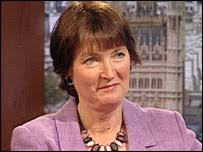
Harriet Harmon finally 'comes out'


The minister responsible for equality has finally spoken, hopefully on behalf of the G'ment, stating that a major shake-up in the law is vital to smash the idea that people are 'past it' once they hit 65.

In an interview with the Daily Mail, Miss Harman, said it should be scrapped. Older people would also be given the right to request flexible hours from their employer. People would not be forced to work beyond 65, but would have the option to choose to - meaning they could stay on into their 70s or even their 80s. Like parents with young children, they should also get a legal right to ask to work part-time or from home, or make a range of other variations to their hours, Miss Harman said.

The change in the law would cover staff who have already signed contracts that say they will retire at the normal age.

Having reported this good news the Mail then goes on to comment how unpopular this will be with employers. Clearly the reporter has not done his research. The majority of employers have not signed up for default retirement. The CBI still stands out as the one organisation that has little confidence in managers being able to conduct proper performance reviews. They also seem to be blissfully unaware that all the research we have on older workers states that they do not want more of the same. They want to 'downsize' their jobs. Most are prepared to accept less money for less stress and for fewer days at work. And the upside is that with the demographic timebomb shortly to explode they will be grateful not to lose the expertise and wisdom of this older worker group.

Such a shame that it has taken the Hague case and years of wasted time and distress caused to those approaching 65 for the G'ment to join the other political parties and most other relevant organisations in putting a stop to what Ms Harmon actually calls the 'last legally permitted discrimination' which is against the elderly.

Tuesday, 5 January 2010

Older workers to delay retirement

A CIPD survey of 2000 older workers sheds light on people's thoughts about retirement. 71 per cent of those aged 55 and above now plan to work on past state pension age, compared with just 40 per cent in a similar survey conducted two years ago.

Although financial reasons were given as a driver for wanting or having to work on, there were plenty of other motivations cited in the survey.

Sixty-five per cent said they would like to continue using their skills and experience.

Fifty-eight per cent said they wanted the social interaction that work brings and 44 per cent said work was good for their self esteem.

The older people get, or the closer to state pension age, the more likely they are to be planning to work on, the survey shows, suggesting that “reality bites as they get close to drawing their pension”.

Nearly half of those aged 45 to 54 expect to work on past a state pension age that on current plans will rise to 66 in 2026 and 67 in 2036.

In recent years, the numbers working on past state pension age have been one of the fastest growing sections of the workforce.

The most recent figures from the Office of National Statistics show that more than 1.4m are currently working past state pension age – 450,000 men aged over 65 and 953,000 women aged over 60.

Over the past year, that section of the workforce has risen by 5.8 per cent when employment has fallen for almost all other age groups.

Friday, 1 January 2010

280,000 Britons will be centenarians by 2050


When I give talks on the pluses of being 50+ I often refer to the rather staggering fact that when the Queen came to the throne in 1953 she sent out 200 telegrams to centenarians. In 2009 that figure was closer to 11,000. Research just published now suggests that more than 280,000 of us will reach that age by 2050. Even hope for me then!

Figures from the Department for Work and Pensions predict that the number of 100-year-olds will double to 22,000 by 2020, double again by 2030 and hit 280,000 in 2050.

They will be living for more than a century thanks to improved diets, medical advances and a move away from manual labour.

While those currently under the age of 60 may be looking forward to a lengthy retirement, the figures raise fears over how the pubic purse will cope.

Meeting the cost of public sector workers' pensions is already imposing a punishing burden on the taxpayer.Separately, company pension schemes are being ripped up, leaving workers vulnerable to poverty in old age. The net effect is that millions of Britons will have to work well into their sixties and beyond if they are to maintain a decent standard of living.

But on a positive note, the older generation may also begin to wield more cultural and political power as they acquire proportionally more votes and financial muscle.

Work and Pensions Minister Lord McKenzie said: 'It is clear that in the coming years an older society offers great opportunities as well as challenges.

'Opportunities for those in retirement to continue working, learning and contributing to society, but challenges around how best to support this group. The biggest changes to pensions for a generation will mean that millions of people will be saving for their retirement.'


Thursday, 24 December 2009

What older workers say they want

Ipsos-MORI questioned 1,196 people born between 1945 and 1960 between September 11 and October 1.

Only one in four older workers plans to retire early, with 43% intending to work on into their late 60s and 70s, research has shown.

Around 26% of people aged over 50 who have not yet retired hope to give up work before they reach the state pension age, according to the Department of Work and Pensions.

But 25% plan to work on for a few years after being able to claim their state pension, while 12% say they will work for a long time after this date, and 6% will leave their current job but look for other work that suits them better.

Only 31% of those questioned said they planned to retire when they were able to pick up their state pension.

Around 28% said they planned to work for longer due to financial considerations, with 26% saying the recession had changed their retirement plans.

But 22% said they did not feel old enough to retire completely, 21% said they loved their job and 20% said they thought working kept them younger and fitter.

Many people did not know the benefits of working on beyond the state pension age, with 44% not realising they would not have to pay National Insurance, while 38% did not know they could defer taking their state pension in exchange for getting a larger income later.

Minister for Pensions and Ageing Society Angela Eagle said: "The idea that you reach state pension age and suddenly stop work is being challenged by our generation of baby boomers, with many not feeling old enough to stop work completely.

"People want the choice to decide what's right for them but, worryingly, many make this decision based on little or no knowledge of the financial facts."


Monday, 21 December 2009

The Pluses Of Employing 50+'s

We keep building our dosier on this topic and the latest research comes from the US in a recent study from the Society for Human Resource Management (SHRM), which showed that:
  • 72 percent of human resource professionals said older workers provide invaluable experience.
  • 69 percent said they had a stronger work ethic than younger workers.
  • 68 percent said they were more reliable employees
We have to keep making these points whenever we meet employers or more to the point recruitment types.

Wednesday, 2 December 2009

Men aged over 50 hit hardest by unemployment

According to a new CIPD report.

Older workers are finding it tougher than other age groups to rejoin the job market after being made redundant. Fewer than one in five over-50s find employment within three months of losing their job, compared to more than 40 per cent of 25 to 34 year olds, official figures show.

Men in the 50-plus age band are faring the worst, with long term unemployment - being jobless for more than six months - doubling in the age group in the past year. This effectively forces men into early retirement, says the alliance of organisations.

In contrast, the rate of long term unemployment among women aged over 50 has only risen half as much, possibly due to their ability to work part-time or willingness to take lower paid roles in the service sector.

Existing government and employer initiatives, such as the Job Guarantee scheme, focus on helping 18 to 24 year olds into employment.

Dianah Worman, the CIPD’s diversity adviser, suggested a similar scheme could help older workers. “For older workers it is far too easy for long-term unemployment to turn into permanent disengagement from the labour market. A job guarantee for older workers would send a signal that these people cannot and should not be resigned to spend the rest of their life reliant on the state.”

Andrew Harrop, head of public policy at Age Concern and Help the Aged, said: “An end to the working lives of men in their 50s now will not only condemn them to an uncomfortable retirement, but will also deprive the recovering economy of their skills and experience, just when they are most needed. The Government must take action in the Pre-Budget Report to avoid creating a lost generation of older workers.”


We would also argue that there must be more emphasis on flexible working which is what the 50`s say that they want. We need to stop thinking that this is all about creating masses more of 40+ hour a week jobs.

Saturday, 28 November 2009

Record number of older workers forced to shelve retirement plans due to financial crisis

A report from the Chartered Institute of Personnel and Developmen shows that 70 per cent of workers aged 55 and above said the financial crisis had left them with no option but to shelve their retirement plans.

The figure was just 40 per cent in the same survey two years ago.The research reveals that private sector workers are the biggest losers.

Only 36 per cent of workers in the private sector have a company pension, compared to 90 per cent of public sector workers.

The research will fuel the debate about 'pensions apartheid', with public sector workers enjoying gold-plated pensions - but almost nobody else.By comparison, few private sector workers even get a company pension, and even fewer get one that will pay for a decent retirement.

Without an adequate company pension, they have no alternative but to keep working beyond state pension age, currently 60 for women and 65 for men.

Private sector workers represent around 80 per cent of the workforce, but more and more are being left to face a financially tough retirement.

The survey, which interviewed around 2,000 people of working age, shows how the recession has escalated the financial crisis facing older workers. When the same question was asked two years ago, 40 per cent of workers aged 55 and above said they would have to work beyond state pension age.

But, just 24 months later, nearly three- quarters of workers are planning to stay in their jobs at an age when most of their parents and grandparents had retired.

This research unfortunately does not mention the other studies which show that more and more older workers want to continue in paid work but they do not want more of the same. Our book discusses this in great detail.

Saturday, 21 November 2009

12 reasons for employing older workers

Came across an excellent article in Entrepreneur by Stephen Bastien and reproduce an edited version of here. Please show this to all business owners.

"So where can businesses find a dependable, steady workforce that has no plans to move up and out? A workforce dedicated to the job at hand and that takes pride in its work? Who will cost them less to hire, train and maintain?

The answer? Older workers.

Below are twelve reasons why hiring older workers can help you maintain a reliable, dedicated workforce and provide a significant cost savings for both the short and long term.

1. Dedicated workers produce higher quality work, which can result in a significant cost savings for you. Stories abound of highly committed older workers finding others’ potentially costly mistakes regarding everything from misspelling of client names to pricing errors and accounting mistakes.

2. Punctuality seems to be a given for older workers. Most of them look forward to going to work each day, so they're likely to arrive on time and be ready to work.

3. Honesty is common among older workers, whose values as a group include personal integrity and a devotion to the truth.

4. Detail-oriented, focused and attentive workers add an intangible value that rubs off on all employees and can save your business thousands of dollars. One business owner I know once told me that one of his older workers saved his company more than $50,000 on one large mailing job. The 75-year-old clerical worker recognized that all the ZIP codes were off by one digit. Neither the owner's mailing house nor his degreed and highly paid marketing manager had noticed it.

5. Good listeners make great employees because they’re easier to train--older employees only have to be told once what to do.

6. Pride in a job well done has become an increasingly rare commodity among younger employees. Younger workers want to put in their time at work and leave, while older employees are more willingly to stay later to get a job done because of their sense of pride in the final product.

7. Organizational skills among older workers mean employers who hire them are less likely to be a part of this startling statistic: More than a million man hours are lost each year simply due to workplace disorganization.

8. Efficiency and the confidence to share their recommendations and ideas make older workers ideal employees. Their years of experience in the workplace give them a superior understanding of how jobs can be done more efficiently, which saves companies money. Their confidence, built up through the years, means they won't hesitate to share their ideas with management.

9. Maturity comes from years of life and work experience and makes for workers who get less “rattled” when problems occur.

10. Setting an example for other employees is an intangible value many business owners appreciate. Older workers make excellent mentors and role models, which makes training other employees less difficult.

11. Communication skills--knowing when and how to communicate--evolve through years of experience. Older workers understand workplace politics and know how to diplomatically convey their ideas to the boss.

12. Reduced labor costs are a huge benefit when hiring older workers. Most already have insurance plans from prior employers or have an additional source of income and are willing to take a little less to get the job they want. They understand that working for a company can be about much more than just collecting a paycheck.

Any business owner who's hesitant to hire an older worker should consider these twelve benefits. Older workers’ unique skills and values--and the potential savings to your company in time and money--make hiring them a simple matter of rethinking the costs of high turnover in a more youthful workforce vs. the benefits of experience and mature standards older workers bring to the mix. You simply do not have the time or resources to deal with high employee turnover. The next time you need to make a hiring decision, you should seriously consider older workers: Their contribution to your company could positively impact your bottom line for years to come."

Right on Stephen!

Monday, 16 November 2009

The future - 3 or 4 generations in the work place?

An interesting article by Shefali Rekhi reports work from researchers of life expectancy at the Ageing Research Centre of the University of Southern Denmark who are calling for a massive change in how we look at work. They point out current work practices requiring people to work five days a week, eight hours or more a day, till perhaps their mid-60s date back nearly half a century.

A study of life expectancy trends in the past century shows that many people can expect to live longer and the majority of those born after 2000 will likely cross 100.

Based on this, Professor Kaare Christensen and his colleagues are suggesting that people should have the option to work fewer hours during their prime years, have more time for family and leisure, and the opportunity to retire much later.

With technological and medical gains, those growing older in the current generation will be more active than earlier generations and will likely suffer much less disability, they project. Besides, working longer may even contribute to their life expectancy and health, they add.

‘Very long lives are not the distant privilege of remote future generations – very long lives are the probable destiny of most people alive now in developed countries,’ the researchers write in their paper. Titled Ageing Populations: The Challenges Ahead, it was published in The Lancet medical journal last month.

The researchers said that if their suggestions are implemented, productivity issues would be automatically addressed in the redistribution – because many people in their 60s and 70s would prefer part-time work to full-time labour. This will open up part-time work opportunities for younger people.

‘The average amount of work per year could stay at about the same as it is at present,’ the researchers said, emphasising that it will mean a net gain for society.

Prof Christensen said: ‘We have to think about making place for three, if not four, generations in the workplace.’

Tuesday, 10 November 2009

Over 50s jobseekers treated like second class citizens

One in six jobseekers aged over 50 feel that they are treated like second-class citizens when applying for jobs, according to a survey* to determine the views of older jobseekers, carried out by online recruitment agency SkilledPeople.com. The survey also showed that it is common place now for the majority of job applications to go unacknowledged – 70% of those surveyed said that they had received responses to only a quarter or less of their submissions, and 15% of these complained that they had not had any replies at all.
The survey demonstrates clearly that the way a company responds to its job applicants can impact corporate reputation. Of those surveyed, nearly nine in ten (87%) felt badly disposed towards the companies who treated them so badly, more than half (53%) said they lost respect for the companies concerned, one in five (18%) would think twice before buying their products and 16% would go to the length of telling as many of their friends, family and colleagues as possible exactly what they thought of the company in question. Nearly two in five (38%) thought that those recruiters who failed to acknowledge or feedback on vacancies were generally lacking in manners and treated applicants like second class citizens.
It’s not only companies that came in for criticism from jobseekers - Government funded Job Centres came in for some stick too. Job Centres were variously described as patronising, unhelpful, disrespectful and totally failing to understand the value of experienced older workers within the workplace.

Monday, 26 October 2009

Lords support anti age discrimination

Have a look at Chris Ball's blog in which he describes a debate in the House of Lords about older workers along with some other issues. We have quoted Chris before who is the CEO of TAEN.

Saturday, 17 October 2009

Jobcentre Plus staff accused of poor service to older people


Jobcentre Plus advisers have been accused of discrimination against older jobseekers and should be given training to help deal with their specific needs, age campaigners said.

Figures published last week revealed the number of unemployed people aged over 50 had risen to 371,000 – a 44% increase in a year – while those out of work for between six and 12 months rose 71%.

The Age and Employment Network (TAEN) and charity Age UK claim that Jobcentre Plus staff have not have the right training to tackle rising unemployment among over-50s, and that tailored sessions on the requirements of older jobseekers must be added to advisers' training programmes.

They complain that advisers tended to focus on paper qualifications, which many older workers did not possess and call for Jobcentre Plus staff to be trained on the range of informal skills held by older jobseekers, and for more support to be given to preparing CVs and interview techniques.

Help for older jobseekers is available through Jobcentre Plus' New Deal 50+ scheme, but this service is not routinely offered to older workers as it has a limited budget. The service is being replaced by the Flexible New Deal.

TAEN chief executive Chris Ball comments that the training of New Deal 50+ advisers had been phased out. "The message is that New Deal 50+ has passed its sell-by date and is not the priority of Jobcentre Plus," he said.

Ball cited the example of one jobseeker who told TAEN: "The Jobcentre virtually told me to go away when I was made redundant at 61 and came to it looking for employment."

The Department for Work and Pensions (DWP) said Jobcentre Plus advisers received 7.5 days induction training followed by seven days personal adviser-specific learning. In the first three months of employment, advisers also undergo seven days of job-specific training.

A DWP spokeswoman said: "Jobcentre Plus is providing real help for its customers. It continually assesses the training needs of staff and the service needs of its customers." In other words no acceptance of the criticisms that many older workers voice when they attend.

Wednesday, 30 September 2009

More help for older workers to find jobs?


Yvette Cooper, Work & Pensions Secretary announced yesterday at the Labour Party Conference that the G'ments Local Employment Partnership (LEP) schemes would be used to create more jobs for older people.

She announced that the government would treble the number of jobs it aimed to create through LEPs - from 250,000 to 750,000 - by the end of 2010.

The new LEP opportunities should be used to offer the over-50s personalised support from Jobcentre advisors to help them get back into the workplace.

There are now 370,000 people aged over-50 who are out of work - an increase of 50% over the past 12-months.

Tom Wright, chief executive of Age UK - formed in April after Age Concern and Help the Aged merged - warned that the support offered to older people through Jobcentre Plus 'routinely fails' the over-50s.

He said: "Some of the support currently offered through Jobcentre Plus routinely fails [the over-50s]. Many of those we spoke to said advisors make little effort to find them jobs to match their skills and experiences.

"We are calling for the government to do much more to improve the support offered by the Jobcentre Plus and to provide financial incentives to employers to take on people aged over-50, particularly those who have been out of work for six months."

Tuesday, 22 September 2009

The pluses of employing older workers

New research shows older workers bring distinct benefits to the workplace and that UK employers are missing a trick by not exploiting latent talent within their ranks.

The research among 15,000 UK workers reveals that mature workers are more likely to be flexible and easier to manage than their younger counterparts. An in-depth analysis of working styles showed that older workers are generally more willing to take on new tasks and accept more varied roles than their younger counterparts. Other positives included older workers being happier to work on their own and being more likely to volunteer to take a leading role, without the need for much guidance.

Workers over 50 were generally found to have a high level of social confidence and a greater preference to build successful and supportive working relationships with colleagues, clients and suppliers. Those in their 50s and 60s were found to be less achievement-orientated than their younger colleagues.

Steve O’Dell, chief executive of Talent Q, the company which conducted the survey, said:“ Our study defies the common stereotype of older workers who are unwilling to accommodate change and may therefore be unresponsive to new challenges presented in the workplace.

“Talent Q found that those of more advanced years are less preoccupied about climbing the career ladder and that they tend to be more happy, fulfilled and confident. As a result, they are glad to take on new work or projects, and aren’t unduly phased by lots of changes. They tend to plough on regardless – a fact that employers are quickly discovering can be a real benefit to their business.”

Thursday, 3 September 2009

CMI demands an end to default retirement age.


We welcome to the growing club of organisations and political parties demanding an end to the default retirement age (DRA) of 65 the CMI Chartered Management Institute.

"We would like to see the abolition of the DRA, to enable businesses to retain their talent. Managers know that the UK has an ageing population, which means increasing numbers are able to work productively into their later years.

Clearly, the recession has had a significant impact on the labour market, but there are still skills shortages in some key areas, including management. Older employees may have these valuable skills and experience, so keeping them in work longer is a powerful driver for managers to support performance.

Joint research by the CMI and Chartered Institute of Personnel Development (CIPD) in 2005, confirms that employer’s interest in keeping older employees is driven by a concern to retain valuable skills and talent:

* 93pc of those surveyed agree updating skills is worthwhile

* there is no cost advantage from shedding older, more experienced workers

* flexible working is a much better answer but is not as prevalent as the CMI would like

One way of potentially cutting the necessary costs, but retaining skills within the organisation could be in the form of flexible working.

These arrangements are key to keeping skills and implementing better solutions around retirement. CMI research shows that 68pc of managers anticipate working part-time towards the end of their career. Also 24pc said that this would be the most important factor in their decision-making on when to retire.

Unfortunately, these arrangements appear to be available only to a minority, with only 34pc offering part-time working to older employees. So, organisations are missing out on their chance to retain their talent and cut costs at the same time.

Ultimately, older employees with the right skills and experience, possibly gained from the last recession in 1991 are of great benefit to UK business. They play a valuable role in coaching and mentoring younger employees. Older employees are keen to give something back, which employers are looking to develop the talent of Generation Y, the younger people who are arguably the future of our companies. So, it is clear that the benefits of having older employees with a wealth of skills and experience far outweigh any negatives, which adds further weight to the argument for the eradication of the DRA."

It really is getting more and more frustrating that this G'ment, although drawing forward the decision about this to 2010, is still prevaricating on this issue. I think the CBI has friends in high places as they are one of the few bodies still advocating it.


Older Americans staying put in jobs longer

It is always good to keep an eye on what is happening with employment in the US.

The study by the Pew Research Center, an independent research group, highlights a rapidly graying labour market due to longer life spans, an aging baby boomer population and a souring economy that has made it harder to retire.

Pew's survey and analysis of government data, being released today, found the share of Americans ages 55 and older who have or were seeking a job rose to 40 percent this year, the highest level since 1961. In contrast, people 16 to 24 who were active in the labor market decreased to 57 percent, down from 66 percent in 2000.

Asked to identify why they're working, 54 percent of older workers responded that it was mostly because they wanted to, citing a desire while they were still feeling healthy to be productive, interact with other people or to "give myself something to do." A sizable number of them — nearly 4 in 10 — also acknowledged staying put at work partly because of the recession.