Showing posts with label 55 plus age group. Show all posts

Thursday, 3 September 2009

Older Americans staying put in jobs longer

It is always good to keep an eye on what is happening with employment in the US.

The study by the Pew Research Center, an independent research group, highlights a rapidly graying labour market due to longer life spans, an aging baby boomer population and a souring economy that has made it harder to retire.

Pew's survey and analysis of government data, being released today, found the share of Americans ages 55 and older who have or were seeking a job rose to 40 percent this year, the highest level since 1961. In contrast, people 16 to 24 who were active in the labor market decreased to 57 percent, down from 66 percent in 2000.

Asked to identify why they're working, 54 percent of older workers responded that it was mostly because they wanted to, citing a desire while they were still feeling healthy to be productive, interact with other people or to "give myself something to do." A sizable number of them — nearly 4 in 10 — also acknowledged staying put at work partly because of the recession.

Thursday, 12 March 2009

Married men live longer - or - does it just feel longer!


We have know this for some time but the latest research from Australia suggests that the difference is getting smaller.A study of about 3,000 elderly men and women since 1988 found married men lived on average 11 months longer than their single counterparts. But marital status for women made no significant difference to longevity. Epidemiologist John McCallum, of the Victoria University in Melbourne, today said scientists were still speculating about the reasons for the difference. "It's the least successful men who are not married and the most successful women who are not married," Professor McCallum said. "One thought is that it's not so much marriage as the fact that it is the fitter people in a biological sense who get married. In other words, people who are hardier and stronger, who are going to survive longer anyway, get married. It could be that there are beneficial effects of having social support and company as well." Prof McCallum said the study had also found that being a non-drinker, a diabetic, a smoker or having high blood pressure reduced life expectancy. "Over the 15 years, men gained about nine months if they had been drinking moderate alcohol and women about five months," he said. The scientists found the benefits of alcohol consumption accumulate with age. "When we looked at the participants after 10 years, men gained eight months and women three months (over non-drinkers)," said Prof McCallum, who addressed the International Healthy Ageing and Longevity Conference in Brisbane. So - more good reasons for drinking!

Wednesday, 4 February 2009

Women 55+ are driving Facebook's success


Women age 55 and over are the fastest-growing U.S. demographic group on Facebook in the last three months, according to new data reported by Inside Facebook Monday. The number of women on Facebook is growing faster than men in almost every age group, and women now make up 56.2% of users.

Women over 55 have nearly tripled on Facebook since September to more than 717,000, and are nearly double the number of men in the same age group. The Facebook audience overall is getting older as its audience grows well beyond the base of college students it started with.


Wednesday, 21 January 2009

Empty nest not such a bad thing?


For many years the received wisdom has popularised the notion of the “empty nest syndrome”.

But a growing body of research suggests that the phenomenon has been misunderstood. While most parents clearly miss children who have left home for college, jobs or marriage, they also enjoy the greater freedom and relaxed responsibility.

And despite the common worry that long-married couples will find themselves with nothing in common, research, published in November in the journal Psychological Science, shows that marital satisfaction actually improves when the children finally take their exits.

While that may not be surprising to many parents, understanding why empty nesters have better relationships can offer important lessons on marital happiness for parents who are still years away from having a child-free house.

Indeed, one of the more uncomfortable findings of the scientific study of marriage is the negative effect children can have on previously happy relationships. Despite the popular notion that children bring couples closer, several studies have shown that marital satisfaction and happiness typically plummet with the arrival of the first baby.

In June, The Journal of Advanced Nursing reported on a study from the University of Nebraska College of Nursing that looked at marital happiness in 185 men and women. Scores declined starting in pregnancy, and remained lower as the children reached 5 months and 24 months. Other studies show that couples with two children score even lower than couples with one child.

While having a child clearly makes parents happy, the financial and time constraints can add stress to a relationship. After the birth of a child, couples have only about one-third the time alone together as they had when they were childless, according to researchers from Ohio State.

The arrival of children also puts a disproportionate burden of household duties on women, a common source of marital conflict. After children, housework increases three times as much for women as for men, according to studies from the Center on Population, Gender and Social Equality at the University of Maryland.

But much of the research on children and marital happiness focuses on the early years. To understand the effects over time, researchers at Berkeley tracked marital happiness among 72 women in the Mills Longitudinal Study, which has followed a group of Mills College alumnae for 50 years.

The study is important because it tracks the first generation of women to juggle traditional family responsibilities with jobs in the work force. In the empty-nest study, researchers compared the women’s marital happiness in their 40s, when many still had children at home; in their early 50s, when some had older children who had left home; and in their 60s, when virtually all had empty nests. At every point, the empty nesters scored higher on marital happiness than women with children still at home.

“Kids aren’t ruining parents’ lives,” Dr. Gorchoff, one of the researchers, said. “It’s just that they’re making it more difficult to have enjoyable interactions together.”

Tuesday, 20 January 2009

Regular running slows the effects of ageing...


..... say researchers at Stanford University School of Medicine in California. A study that has tracked 500 older runners for more than 20 years shows they have fewer disabilities and longer active lifespans than non-runners.

(The photo by the way is yours truly running the 10k Abbey Dash in Leeds last year - in yellow. My fellow runner, John, is a doctor. I'm not daft!)

The study's senior author, James Fries, an emeritus professor of medicine, says the research clearly shows the benefits of staying fit.

"If you had to pick one thing to make people healthier as they age, it would be aerobic exercise," Fries says.While both runners and non-runners did become disabled with age, the active group remained healthier longer.

"Runners' initial disability was 16 years later than non-runners."

Running has also kept death at bay. It slowed cardiovascular deaths and has been associated with fewer early deaths from cancer, neurological disease and infections. Surprisingly, the injuries expected with ageing runners haven't emerged. It was not associated with higher rates of osteoarthritis and runners needed no more knee replacements than non-runners.

Where you run, walk, or cycle has an effect on your mental alertness. Spending an hour interacting with nature, like being in a park, can help improve memory and attention by 20%, according to a University of Michigan psychology study.

"Interacting with nature can have similar effects as meditating," researcher Marc Berman says. So - you really don't have to spend a fortune on gym membership and breathing fresh air in a natural setting is a definite plus to staring at a treadmill screen! But then I am biased!

Wednesday, 14 January 2009

Me and Helen Mirren


I got a text from my daughter Caitlin on Monday morning after this article came out in the Yorkshire Post to inform me that this is the closest I will ever get to Helen Mirren. Looking at the photo they have of me I think they may be right! I did think the article was spot on though and delivered the flavour of the book.

Sunday, 4 January 2009

Be Positive in 2009


Having had some media interviews recently it is revealing just what the interviewers highlight and what they remember later. One quote that was repeated consistently on a radio programme was the point that of all of the people on this planet who had ever lived to the age of 65 half of them were alive today.

The other statistic that had impact was the 7.5 years that you can add to your life by simply having a positive attitude towards ageing and life in general. This is especially intriguing when you compare it to the extra 4 years one can expect if you have low blood pressure and cholesterol levels or the 1-3 additional years from exercise and giving up smoking. I was also interested to see that the Times on Saturday was quoting this research as part of its tips on getting the most out of the New Year. Why this works is less clear so we were interested to read of a recent Harvard Medical School study of 670 men which found that the optimists have significantly better lung function. The lead author, Dr Rosalind Wright, believes that attitude somehow strengthens the immune system. “Preliminary studies on heart patients suggest that, by changing a person's outlook, you can improve their mortality risk,” she says.

So now you know what your No 1 New Years resolution needs to be!


Saturday, 3 January 2009

Myths about ageing


Came across this website which outlines a series of myths about ageing and the evidence to disparage each one. We do this in our book but it is interesting to see US data pinpointing the same issues. We discovered this from a very informative Malaysian site which is worth a look and called Seniors Aloud . A focus on 50+ is increasingly a worldwide phenomenon!

Friday, 2 January 2009

Recommendations

As we talk to more and people about this project with 50 pluses we get asked from where can people buy the book. At the moment the cheapest price is through Amazon which is why we are now advertising it on this site. We also get asked about other related books that we have found useful so we will add those to our little widget on the site. ( Hope you are impressed with this growing evidence of our becoming late life techies.) I have just added a really excellent and very readable and amusing book on the brain by Prof. John Medina. He describes 12 principles for surviving and thriving at work, home and school. The hardback version comes with a very engrossing DVD which gives examples of what he is talking about. its more expensive than the paperback but I think it is worth the extra money for the DVD. If we recommend books like this please do let us know your reaction if you read any of them.

Thursday, 1 January 2009

Depression begins at 40!


Well - maybe a bit of an exaggeration but an international study of mental health and happiness shows that the risk of depression was lowest in younger and older people, with the middle-aged years associated with the highest risk for both men and women. Previous research has suggested that the risk of unhappiness and depression stays relatively constant throughout life.However, the latest finding - of a peak risk in middle age - was consistent around the globe, and in all types of people. In the UK 44 is the age that we are most likely to be depressed.

Researcher Professor Andrew Oswald, an economist at the University of Warwick, said: "It happens to men and women, to single and married people, to rich and poor, and to those with and without children."

He said the reason why middle age was a universally vulnerable time was unclear.Professor Oswald said for the average person, the dip in mental health and happiness comes on slowly, not suddenly in a single year.Only in their 50s do most people emerge from the low period.

"But encouragingly, by the time you are 70, if you are still physically fit then on average you are as happy and mentally healthy as a 20-year-old".


Baby-boomers most efficient at cutting energy costs during recession


Over 55s are 25% more likely to shrink their monthly bills by being energy efficient than the younger generation, according to a new survey from Opus Energy, an independent electricity supplier for UK businesses.

The survey asked over 500 people about the energy saving steps they take both at home and at work. The findings showed that when it comes to tightening belts the “baby boomer” generation are way ahead of younger generations. Having lived through two recessions and grown up in post-war Britain, the over 55s are well versed in making those small steps that add up to real financial savings.

The results showed that the over 55s are well versed at making efficient use of modern technology. In the workplace, the baby boomers are three times more likely to switch off phone chargers when not in use.

The baby-boomers also have the most ‘efficient’ tea breaks at work with more than half the over 55s (55%) taking care not to boil more water than they need each time compared to under a third (27%) of under 25s.

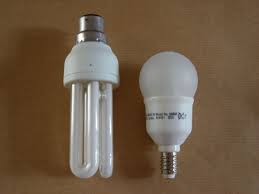
Even though two thirds (66%) of young Brits claim they are switching to energy saving bulbs to help curb costs at home, a staggering nine out of ten (88%) over 55s said they had already made the energy efficient swap.

Under 25s were also more likely to think that making a business or a home energy efficient would increase its running costs. But as the baby boomers are clearly demonstrating, when energy costs are high and belts are tightening, small energy saving steps can be enough to equate to big savings.

Louise Boland, Director at Opus Energy said:

“It’s clear that having lived through two recessions, our older generations are more adept at taking steps to save on their energy usage to cut their bills. What is interesting is that the older generations have really embraced the energy saving benefits of modern technology, to an even greater degree than their younger counterparts."


Monday, 22 December 2008

Over 55's are savvier online shoppers

Online shoppers in the 55+ age bracket are apparently far more likely than 16-24 year-olds to use Web 2.0 resources like blogs and forums in advance of any purchases, according to web hosting firm 1&1 Internet. Its survey found that 70% of older respondents do their research online before committing to purchases, compared to just 53% of the youngsters. So either these ‘silver surfers’ are just more in tune with the Web 2.0 blogosphere – or they’re a lot more careful

Checking for online feedback is now becoming an increasingly common part of online buying decisions. Overall, about two-thirds of those questioned said they regularly check the internet for material about the specific retailer before they make a purchase, while 46% said they tried to read some kind of online review about the particular product. Indeed, we’re increasingly reliant on the feedback that other users leave about previous purchases – around 40% said they routinely rely on websites’ star ratings and rankings. An assiduous 24% even go to the lengths of looking for customer service commitments on the website.

One in three of us is now perfectly happy to leave a review of a site or product after we make a purchase, whereas only one in five can be bothered writing a letter (although statistically, people still prefer the more old-fashioned approach of actually speaking to people about their experiences). And interestingly, this is probably good news for smaller retailers, at a time when they’ve never needed it more: now that it’s so easy for people to get feedback on the most unfamiliar of sellers, they’re more likely to trust them with their money. Well, as long as the feedback’s good.


Saturday, 20 December 2008

50+ women are more irritable in marriage than men


A Saga survey of 800 50+ women and men shows that women are for more annoyed with their men than the other way around.

Four in five women admitted they found certain aspects of their husband's behaviour irritating.

Men are more forgiving, with four in ten (40 per cent) finding nothing irritating about their spouse.

In total, only one in five people (22 per cent) said that nothing irritates them about their spouse.

The survey comes in the run-up to Christmas – one of the few times throughout the year when many couples spend a significant amount of time at home together.

The biggest frustration for men was their wives always wanting to do things their own way (19 per cent) and their wives making arrangements without consulting them (14 per cent).

The survey looks at the common complaints in marriage for the over-50s.

The top five for women include:

*Being taken for granted (26 per cent)

*Having an untidy partner (24 per cent)

*Their husbands insisting on always doing things their own way (24 per cent)

*Their husbands leaving all the housework to them (17 per cent)

*Their husbands undermining them in front of others (13 per cent)

Helping out with the housework shows the widest difference in attitudes with just two per cent of men admitting this was a cause of friction compared to 17 per cent of women.

Despite these findings, the over 50s couples still enjoy being with each other as more than three quarters (83 per cent) believe that spending time together is the most important aspect of marriage.


Thursday, 11 December 2008

Over-50s Could Spend Millions More Online


The over-50s hold the key to continued growth in online food and grocery shopping, according to new consumer research from international food and grocery expert IGD. The report, called the Golden Generation predicts that the value of online food and grocery shopping will nearly double in size by 2013 to be worth £6.2bn (up from £3.2bn in 2008). It suggests that older people today remain open to new ideas and experiences and many enjoy shopping online. However, food and grocery is lagging behind certain other categories and there are some barriers to overcome.

The key issues are delivery charges; ease and security of ordering; and product reliability.

In a survey of just over 1,200 older shoppers (50+) conducted in the autumn, 27% said that they would start shopping for food and grocery online in certain circumstances.

  • Nearly half (48%) of those considering online food and grocery shopping would do so if various price issues were dealt with - eg, scale of delivery charges for small orders, guaranteed same prices as in store, and the same promotions available
  • More efficient and secure ordering was mentioned by 46% - including greater security against ID fraud, better view of products on the web site and a quicker ordering process
  • Two fifths (39%) were unsure about the reliability of product quality and delivery - suspecting, for example, that they would receive products with a short shelf life.
The 'Grey Pound' is proving very attractive and the recession is likely to enhance that attractiveness.

Saturday, 6 December 2008

The Rainbow Years published at last!


Mike and I are delighted to announce that our book has been published this week. In addition to bookshops it can be bought at Amazon.co uk, play.com, and also from www.fiftyforward.co.uk. We should point out that all 3 of these sources offer a guaranteed discount. You will probably also get discounts in bookshops but clearly that is unknown to us.

This feels like an important milestone - but only one. That is why we are continuing with this blog and also to contribute to the learndirect fifyforward website. So do watch this space ...


Thursday, 4 December 2008

Grandmas don't know everything...

Following on from our previous post Mike and I decided that we don't have enough humour in this blog. In fact you don't find much humour in most blogs. My American friends in particular think that this is because of political correctness and a terror of litigious actions.
Well - to hell with that! At our ages we should be able to enjoy some humour so from time to time will share items with you that amused us. Here is one that arrived today.....

Little Tony was 9 years old and was staying with his grandmother for a few days.


He'd been playing outside with the other kids for a while when he came into the house and asked her,

'Grandma, what's that called when two people sleep in the same room and one is on top of the other?'

She was a little taken aback, but she decided to tell him the truth. 'It's called sexual intercourse , darling.'

Little Tony said, 'Oh, OK,' and went back outside to play with the other kids.

A few minutes later he came back in and said angrily,

'Grandma, it isn't called sexual intercourse . It's called Bunk Beds.....

.....And Jimmy's mum wants to talk to you.'

Wednesday, 3 December 2008

Grandma puts pension at risk when she stays at home to care for grandkids


The Daily Mail has launched a campaign to highlight the fact that although there are fairer pensions for stay-at-home mums, grandparents who are increasingly playing a major caring role in the family are at risk of being disadvantaged with their pensions. They point out that more than half a million families rely on grandparents to help care for their young children. But in fulfilling this vital family role, which is allowing mums and dads to earn a living, the grandparents are throwing away their chances of a decent state pension.

With the average age of becoming a grandparent just 51 or 52, this means grandmothers are jeopardising their pension prospects.

Unlike registered childminders, they don't qualify under the child-care tax system. Even if the child were looked after by a neighbour, the taxpayer would foot 80 per cent of the childcare costs to a weekly maximum of £175 for one child. The 55-year-old grandmother would not get a penny.

And while from 2010 women who care for older relatives will get an NI credit after 20 hours a week caring - as well as a carer's allowance and a full NI stamp at 35 hours - grandparents are again overlooked.

To qualify for a full state pension of £90.70 a week, women have to build up 39 years of national insurance contributions. This is being reduced to 30 for those retiring after April 6, 2010.

But while stay-at-home mums receive Home Responsibilities Protection to help to replace these missing NI contributions, grandmothers who give up work receive no help from the Government.

Samantha Smethers from Grandparents Plus adds: 'So many grandparents give up work to care for their grandchildren, yet they are being taken for granted.

'Many mothers prefer their children to be looked after by a close family relative rather than entrusting the care of their child to a complete stranger.

'More than 90 per cent of stay-at-home grandmothers do it for nothing. The least we can do for them if they do give up work to care for their grandchildren is to ensure that they don't miss out on the chance to secure that full basic state pension in retirement.'

The Government says that grandparents will benefit from the new rules allowing them to buy back extra years of missing NI contributions.

But Baroness Hollis says most grandparents will find this impossible if they are not earning: 'Stay at-home grandparents give the best possible care and love for the child. Giving them more financial help would strengthen family bonds and might mean a greater willingness 20 years down the line for the granny, in turn, to be cared for by her family.'

This seems to us a campaign that needs supporting.

Monday, 1 December 2008

Sex the number one leisure activity for credit crunch days


As the credit crunch bites, Britons may be turning to sex as a cheap way to pass the time, a charity says.

A YouGov survey of 2,000 adults found sex was the most popular free activity, ahead of window shopping and gossiping.

The Scots were most amorous with 43% choosing sex over other pastimes, compared with 35% in South England.

Aids charity the Terrence Higgins Trust, which published the survey, also welcomed recent figures showing an increase in condom sales.

Around one in 10 respondents to the survey, carried in November, said their favourite free activity was window shopping and 6% chose going to a museum as the cheapest way to pass the time.

But the sexes differed on their priorities, with women preferring to gossip with friends while men had sex firmly at the top of their list.

And of course we have already quoted previous research to the effect that the over 50's, 60's and 70's are getting more than their fair share of this!


Sunday, 30 November 2008

Boomers still saving for the future

More than eight out of ten (83%) people over 50 say they are still saving for their retirement, according to The Savings Outlook Report from Alliance & Leicester Savings*.

Financial security in later life is a real priority for this group and 42% said they are making, or have made, sacrifices to help ensure they enjoy a comfortable retirement. Almost half (48%) say they will have to save for longer because of increased life expectancy. Furthermore, just under half (48%) are concerned that the changing economic climate will have a negative impact on their enjoyment of retirement.

The Alliance & Leicester Savings report found that the majority of people (58%) over 50 do not harbour any illusions of an extravagant retirement lifestyle, but are instead seeking to balance living well now with providing for a secure future.

There is a mixed picture of how those approaching, or already in, retirement feel about the financial decisions they have made in the past. Almost half of these ‘Silver Savers’ (48%) regret not giving enough thought to their finances in years gone by. Only a quarter (26%) of those surveyed say they live for today, spending now, as and when they choose, while the majority are holding back and striving to protect their retirement savings pot.


A third (34%) plan to use savings to fund holidays during retirement and another fifth (18%) intend to upgrade their car. A generous one in ten (13%), want to build an inheritance pot for their family or fund children or grandchildren’s futures (12%).

So - maybe we boomers are a bit more responsible than some press reports suggest.

Friday, 21 November 2008

We've had enough and we're off...


The prospect of living through a recession is driving more than 400,000 over 50s Brits to consider packing their bags and leaving the UK for good to improve their financial position, according to new research from RIAS, specialist insurer for the over 50s.

Sounds dramatic doesn't it! There may be some truth in this but as a psychometrician - my first job - I would want to know much more about the survey questions. Asking people if they like the idea of moving abroad is one thing. Asking them if they intend to do so is something else. It is always sensible to be sceptical about surveys - especially those carried out by commercial organisations with something to sell. Having said that this still tells us something about levels of comfort and satisfaction being experienced by the over 50's.