Hilarious article in the Daily Mail which reports research on bustards showing that
indulging in overt sexual behaviour could lead to premature ageing in men through 'burnout', according to scientists studying fertility patterns in birds.
A 10-year research programme into the sex lives of bustards, birds with a very flamboyant mating display, showed a dramatic decline in the quality of sperm among the more 'showy' males.
The mating display of the male Houbara bustard, known as 'booming', sees striking ornamental feathers flare up before the bird runs around while making a low-pitched call.
The males can 'boom' for as much as 18 hours a day, six months of the year.
Dr Preston, who is based at the University of Burgundy in France, led his team in measuring the length of time each male spent 'booming', and then compared that with changes in fertility, which is usually associated with ageing.
The more time the birds spent 'booming', the more dramatic was the decline in their fertility.
Showing posts with label sexual activity. Show all posts
Showing posts with label sexual activity. Show all posts
Friday, 5 August 2011

Monday, 27 June 2011
Are we still up for hanky panky?

The Kinsey Sex Institute states that the average 18 to 29-year-old has sex 142 times a year; 30 to 39-year-olds 86 times a year; 40 to 49-year-olds 69 times a year; and the over-50s have sex 52 times a year.
Diana then gives us many reasons as to why this need not be the case with some interesting case studies. Perhaps alarmingly 1 in 20 couples are virtually celibate, rising to one in 10 among the over-45s.
Monday, 20 June 2011
So what are our favourite pastimes?

It found that after gardening and eating out, passion is the third most popular pastime for people in their 50s. For nearly one in five of them (18 per cent), it topped the list.
For those in their 30s, the most popular pastimes were going to the gym, eating out and watching television.
Sex came tenth on the list in this age group, with only 3 per cent rating it as their favourite activity.
The favourite pastimes of the over-50s reflect a trend towards simpler pleasures in tough economic times.
Traditional middle-age treats such as cruises and holidays did not feature in the top ten, while exercise did. Walking came fourth.
Monday, 13 December 2010
Quarter of over 50s 'cheat on their partner'
In addition a sixth of them never use contraception when embarking on a new relationship, the highest of any age group, found the poll.
One in three 51 to 55-year-olds said they had "slept around" and had an unprotected one-night stand, while one in four admitted to having more than one ongoing sexual relationship.
The poll of 3,000 people, commissioned by The Co-operative Pharmacy, found that today's young people are less promiscuous than their elders were at the same age.
A fifth of teenagers over 16 delayed having their first sexual encounter until the legal age of consent, the survey found, compared to only one in 20 of those now aged 20 or older.
Lisa McCreesh, a pharmacist for The Co-operative Pharmacy, said: "Our research challenges the belief that teenagers are more promiscuous than older generations.
"They unfairly get a bad name, while those in their fifties, who grew up in the sixties and seventies, are living up to the era’s care free image as they take greater risks with their sexual health."
Natika Halil, director of information at FPA, the sexual health charity, said: "The message is the same for teenagers as well as people in their 20s, 30s, 40s and 50s – don’t take a risk with your sexual health over the festive period. There is only one protection against most STIs – wearing a condom."
Lisa McCreesh, a pharmacist for The Co-operative Pharmacy, said: "Our research challenges the belief that teenagers are more promiscuous than older generations.
"They unfairly get a bad name, while those in their fifties, who grew up in the sixties and seventies, are living up to the era’s care free image as they take greater risks with their sexual health."
Natika Halil, director of information at FPA, the sexual health charity, said: "The message is the same for teenagers as well as people in their 20s, 30s, 40s and 50s – don’t take a risk with your sexual health over the festive period. There is only one protection against most STIs – wearing a condom."
Tuesday, 7 December 2010
Another reason for living to be a 100

Advances in medical science have extended not only human life spans, but virility during the course of those longer lives.
That fact has been accompanied by a growing body of research into the sexuality of people who have passed what is to be considered retirement age. Now, a new Australian study shows that both sexual activity and a desire for sex remain a consideration for men who are approaching the century mark. "Although many people, including some doctors, believe that sexuality isn't important to older people, our study shows that this is not the case. Even in the tenth decade of life, 1 in 5 men still considered sex important," said study researcher Zoe Hyde, a doctoral researcher with the Western Australian Centre for Health and Ageing at the University of Western Australia. "However, some common medical problems are barriers to older people remaining sexually active," Hyde said.
The Australian study comes after studies in the United States and Sweden have shown that many or most people in their 70s lead active sex lives, and have found high levels of sexual satisfaction among this group, sometimes even exceeding that of their younger years.
The new study looked at nearly 2,800 men between the ages of 75 and 95. While sexual activity and the desire for sex was lower than in studies of younger adults, it remained significant. Nearly a third of the men surveyed had had sex in the past year, and just under half considered sex to be "at least somewhat important."
Of those who were still sexually active, more than forty percent wished to have more, but were blocked, often by their own health problems or their partners' problems, including conditions such as osteoporosis, diabetes, prostate cancer or other physical limitations.
Men who wish to be sexually active late in life can take some preventative steps in their younger years, Hyde said.
"Chronic disease, such as diabetes, appears to be the main reason that older men cease being sexually active," she told MyHealthNewsDaily. "If men want to remain sexually active as they age, the best thing they can do is get sufficient physical activity, eat a healthy and nutritious diet and stop smoking."
Hyde said the study has also highlighted other things that may help people who are older stay sexually active if they wish.
"It was interesting that testosterone levels were still associated with sexual activity, after we controlled for medical problems and social factors," she said. "This suggests that testosterone deficiency could possibly cause problems for some men, so this is an area that clinical trials of testosterone therapy should look at."
Testosterone therapy has been advocated to stop age-related decline in men, but it remains controversial because of a lack of data on its risks and benefits.
"It would be premature to suggest testosterone therapy to improve sexual interest and activity at this stage," Hyde said. "We need further studies to properly explore the risks of therapy as well as the possible benefits."
The study did hold some caveats. The authors noted that the men in the study lived in the community, and may not represent the population of men in that age range as a whole, some of whom live in assisted-living facilities.
But researchers also noted that some men might have been reluctant to be more honest in their responses because "sexuality can be a sensitive topic."
Judith Kuriansky, a clinical psychologist and adjunct faculty member of Columbia University Medical Center’s Department of Psychiatry, said the new study is not surprising in light of research from other countries.
"Men who are over 75 are not over the hill anymore," Kuriansky said.
Because there are more women than men who live to that age, "They, I'm sure, have lots of partners to choose from," she said, adding that "with all these medications that are available, they can still perform longer."
Wednesday, 11 August 2010
Sex and the over 50's, 60's, 70's, 80's .....

Wednesday, 10 March 2010
Men likelier than women to enjoy sex in old age
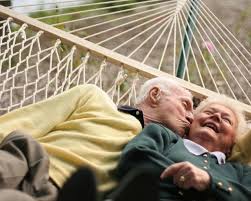
Did that get your attention? Men are more than twice as likely as women to be sexually active in old age but good health is the key for both to feeling naughty, says a study published Wednesday by the British Medical Journal.
One survey covered 3,000 people aged 25-74 who filled in questionnaires in the mid-1990s as part of an investigation into midlife.
The other survey, focussing on old age, was carried out a decade later among a similar number of volunteers aged 57-85.
At the age of 55, men have on average almost 15 years of sexually active life ahead of them, and women 10-and-a-half years, the researchers found.
They also discovered a major gap between the genders on sex lives.
The biggest gap was among 75- to 85-year-olds, where 38.9 percent of men said they were sexually active, compared with 16.8 percent of women.
Another 41.2 per cent of the men were interested in sex, compared with 11.4 percent of the women.
Within the "sexually active" group of the 75- to 85-year-olds, 70.8 percent of men rated their sex life as of good quality, compared with 50.9 percent among women.
Why such a difference?
It could be partly explained by opportunity, say the investigators.
Around three-quarters of men across all age groups said they had a partner.
Among women, though, only two-thirds of respondents between 25 and 54 had a partner. For women aged 75 and beyond, fewer than four in 10 had a partner -- a figure reflecting women's longer lifespan and the tendency of men to marry younger women.
Good health, too, was vital for sexual wellbeing, said the study.
An individual in sound health is almost twice as likely to be interested in sex and can expect to enjoy around six more years of sexual activity compared to a peer in poor health.
If the study's measure of "sexually active life expectancy" is credible, American men generally stop having sex around the age of 70, about eight or nine years before their death, according to demographic life expectancy.
For women, "sexually active life expectancy" would ended around 65, yet their demographic life expectancy was around 82 or 83.
The question is - do you want to be a statistic?
Wednesday, 3 March 2010
Sexually Transmitted Diseases In Over-45s Increasing
Well - after all of the good news in the last posting about happiness and ageing this should bring us down to earth.
Rates of sexually transmitted infections have doubled among the over 45s in less than a decade, reveals research published ahead of print in the journal Sexually Transmitted Infections.
Researchers monitored the numbers of sexually transmitted infections (STI) diagnosed in 19 sexual health clinics and reported to the Health Protection Agency’s Regional Surveillance Unit in the West Midlands.
The period of analysis spanned eight years between 1996 and 2003 inclusive.
In total, 4445 STI episodes were identified among people aged 45 and older during that time. Most of these were in straight men and women.
The most commonly diagnosed infection among the over 45s was genital warts, accounting for almost half (45%) of the episodes. Herpes was the next most common, accounting for almost one in five (19%).
Men and those between the ages of 55 and 59 were significantly more likely to have an STI than anyone else.
Among women, rates were highest among those aged 45 to 54; among men, rates were highest among those aged 55 to 60 plus.
And in 1996, this age group comprised 3.9% of all clinic visits; by 2003, this had risen to 4.5%.
While the numbers of infections identified in younger age groups rose 97% during the period of the study, those identified in the over 45s rose 127%.
“Indeed, it may be argued that older people are more susceptible [to sexually transmitted infections] as they are less likely to use condoms than younger people,” the authors say, adding that as successive waves of people with more liberal sexual attitudes and behaviours age, the problem is likely to worsen.
Saturday, 9 January 2010
When did you last have sex?

This could be a question that men might be routinely asked as part of a screening programme for propensity to heart disease. A new research study in the US found that with all other factors held constant men who had sex twice a week cuts down the risk of heart disease by half. In addition, having sex once or twice a week in winter can boost the immune system and reduce the chances of catching colds and flu, according to researchers at Wilkes University, Pennsylvania.
They found it boosted levels of immunoglobulin A or IGA which binds to organisms that invade the body and then activates the immune system to destroy them.
So now you know - and I have had viral infection and a cold this winter already!!
Saturday, 14 November 2009
The underpants controversy

According to a survey by Debenhams once we men reach 44 yet alone 50 we stop buying our own underpants. Prior to that our mothers bought them for us until we were 19. Apparently we only buy our own underwear if we are looking for a new relationship. I would like to register that I always buy my own underpants. I have been married most of my adult life - though not to the same person - and my current relationship is almost 25 years old. So Debenhams - what do you have to say to that! And does anyone else out there have anything to say about this?
Thursday, 12 November 2009
Sex really is good for you!

Caroline Jones has an excellent piece on this topic which I am sure all of visitors will want to peruse. Highlights are:
- having sex three times a week could halve your risk of heart attack or stroke.
- having sex once or twice a week has been found to raise your body’s levels of an antibody called immunoglobulin A which can protect you from viral and bacterial infections.
- During sex, the natural steroid DHEA is secreted throughout the body and after an orgasm the level in the bloodstream soars to five times its normal amount. Known as the anti-ageing hormone, high levels of DHEA are thought to keep your body fitter and disease-free, helping you to live longer.
- An Australian study found that people who had an orgasm at least three times a week had a 50% lower chance of dying from any medical reason than those who only climaxed once a month.
- Couples who have sex at least three times a week look more than a decade younger than people who make love less often.
- Thirty minutes of sex burns up to 150 calories per half-hour, which is equivalent to a small glass of wine. If you have moderately active sex twice a week, you’ll burn an extra 15,600 calories a year!
- It also helps you sleep better, reduces stress, eases depression, boosts self esteeem and reduces pain.
Tuesday, 27 October 2009
A new survey on adventurous sex drive
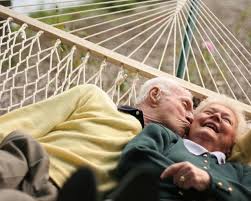 Good news for those of us on the wrong side of 50. It seems that your sex life doesn’t dry up as you get older after all, at least not in Canada! The research was conducted online and more than 494 people over the age of 50 participated in an in-depth interview about their sex lives and sexual desires. The results indicated that many of the older participants were anything but past it. The survey found that many Canadians over the age of 50 reported having adventurous and frisky sex as they have grown older. The word ‘ferocious’ was also used to describe some of their sexual encounters. This stands in stark contrast to the common attitude that sexual desire and activity decreases with age. Nearly half of the people surveyed said their sexual inhibitions had decreased since they turned 50, and more than a quarter said the quality of their sex life has improved since turning 50. Also more than half of the respondents said they wished their sex life was more spontaneous. One possible explanation of the significant increase in sexual activity in the over 50’s is that the life stresses are often reduced dramatically with retirement and with children leaving home. The reduction in these day to day stresses could have a direct influence on the renewed interest in sex.
Thursday, 1 October 2009
How we really forgotten how to have sex?

Not according to all the research we have come across, but clearly Manchester Council think that its older citizens need some tips. There has been an uproar about their spending £8k of council tax money on producing an illustrated 47-page booklet which offers tips for those seeking to spice up their marriage or looking for new love after divorce.The Daily Mail, along with other media are having a ball with this - a good start to International Older Person's Day - which is today. Those of us living in Yorkshire of course know that on this side of the pennines we don't need this kind of help!
Tuesday, 14 April 2009
Unprotected sex on the rise for the over 50's
The over-50s are putting paid to the myth that only young people risk their sexual health, with one in five admitting to having unprotected sex with a new partner. Research by the Royal Pharmaceutical Society of Great Britain, has shown that almost one in four of 45- to 54-year-olds said they did not use contraception as they trusted the person they were sleeping with did not have an sexually transmitted infection.
Nearly 32 per cent of the 2,258 people interviewed described their risk of picking up an STI when having unprotected sex as either unlikely or very unlikely. A further 20 per cent believed their chances of catching an STI were "next to nothing."
For all of our life experience and supposed wisdom with advancing years we are certainly naive on this issue.
Nearly 32 per cent of the 2,258 people interviewed described their risk of picking up an STI when having unprotected sex as either unlikely or very unlikely. A further 20 per cent believed their chances of catching an STI were "next to nothing."
For all of our life experience and supposed wisdom with advancing years we are certainly naive on this issue.
Monday, 1 December 2008
Sex the number one leisure activity for credit crunch days

As the credit crunch bites, Britons may be turning to sex as a cheap way to pass the time, a charity says.
A YouGov survey of 2,000 adults found sex was the most popular free activity, ahead of window shopping and gossiping.
The Scots were most amorous with 43% choosing sex over other pastimes, compared with 35% in South England.
Aids charity the Terrence Higgins Trust, which published the survey, also welcomed recent figures showing an increase in condom sales.
Around one in 10 respondents to the survey, carried in November, said their favourite free activity was window shopping and 6% chose going to a museum as the cheapest way to pass the time.
But the sexes differed on their priorities, with women preferring to gossip with friends while men had sex firmly at the top of their list.
And of course we have already quoted previous research to the effect that the over 50's, 60's and 70's are getting more than their fair share of this!
Subscribe to:
Posts (Atom)

 Posts
Posts


